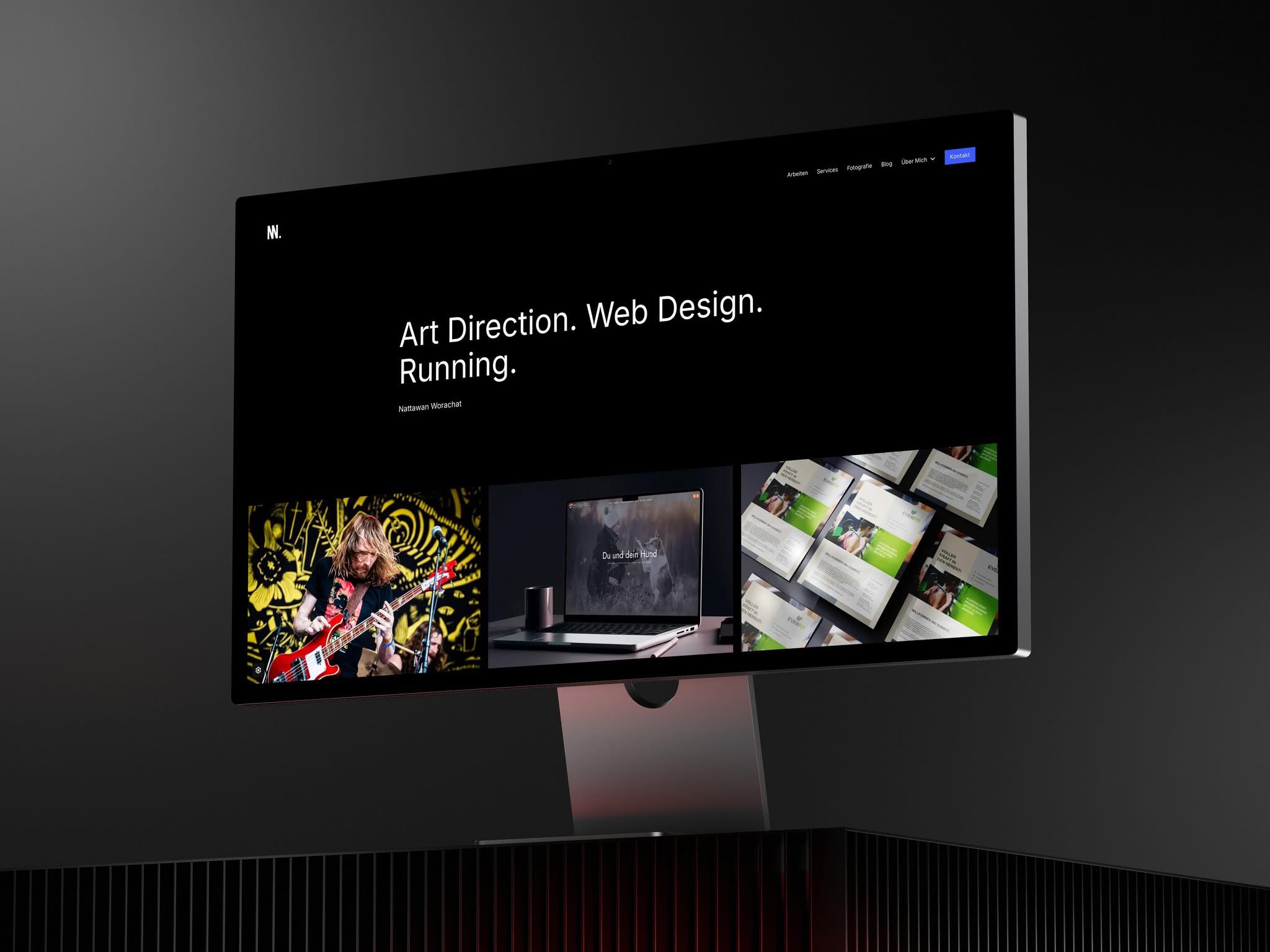
I just bought the Bricks Builder Ultimate License after trying it out for a while — and I’m honestly impressed by how amazing this builder is! During my 15+ years of my career as a designer, I’ve built around 50 websites with WordPress (probably more, stopped to count), especially while I worked for my former agency. I eventually switched to Webflow because most page builders felt too bloated or heavy, and I always needed extra plugins just to achieve simple things. After discovering Bricks, though — I’m in love. I really hope the developers continue improving this amazing tool (and don’t go down the same path as Elementor, please ).
Anyway, back to my website: I wanted to create a minimalist portfolio — simple typography (I’m using Inter for now, though I might switch to another sleek font later), clean colors, and as little clutter as possible. Inspired by the trend of minimal blog designs, I decided to keep my blog layout clean and narrow. For each portfolio item, I use larger font sizes and images to give everything a bold, balanced look. My goal was also to achieve a great PageSpeed score, without using external tracking scripts or too many plugins. And I did it — PageSpeed Score: 99/100!
There’s still more to improve, but I’m really happy with my first Bricks-built website so far. More to come soon — I’m already working on another web project.
Can I ask how you handle images? I noticed that you use both avif and webp. How do you decide to use webp vs avif, and do you use jpg fallbacks for older browsers?
Hi, thank you so much! That’s a great point — I hadn’t really thought about it, since I just rebuilt my website from Webflow. (I got carried away with Bricks; there are still many things to optimize.) Normally, I would use WebP, and some images are still from my previous Webflow settings. I plan to convert them later.
I preferred importing JPGs and letting a plugin optimize the images (because these optimizers usually also create fallback images), but then I found that AVIF has improved over time. In general, I would use WebP for clients because it’s widely supported in many browsers.
For now, however, I decided to optimize the images myself before uploading them to the website, because I want to avoid using too many plugins. Since I know that my clients and friends who know me use modern browsers and devices, I decided to stick with AVIF. I’m still trying to figure out the best solution for this.
Yes, I do. We converted a lot to Webp (manually or with plug-ins), seems to work very well and we never have a problem with this format since few years. But if you are not sure (and if your clients are very, very old school who only use very old generations of browser), then I would use a plug-in which generate fall back images. But webp has become quite stable, so I don’t think there should be a problem.
Excellent, thanks. I would love to stop using jpg’s all together. It looks like it’s been five years since webp was supported in all major browsers, so maybe its time
 I really hope the developers continue improving this amazing tool (and don’t go down the same path as Elementor, please
  ).
).